Why Versatility Is the Skill That Carries Athletes Into Life After Sports
Talent can open a door, but versatility keeps people in the room.
That lesson shows up clearly in football, business, education, family life, and leadership. The person who can only do one thing has a narrower path. The person who can adapt, learn, serve, pivot, and keep creating value has more ways to survive disruption and more ways to build something meaningful after the original dream changes.
For athletes, this matters because playing careers are fragile. A roster spot can disappear quickly. An injury can change a season. A depth chart can close an opportunity before it opens. For leaders and entrepreneurs, the same principle applies in a different form: markets slow down, deals fall apart, teams need convincing, and life rarely follows the clean plan people imagined.
The real advantage is not simply having a plan B. It is developing transferable skills, staying present in each season, and learning how to create value wherever the next chapter begins.
The Core Problem or Opportunity
The sports world often celebrates specialization. The star receiver, the franchise quarterback, the elite shooter, the dominant scorer, and the first round pick all become easy symbols of success.
But most careers are not built from the top of the depth chart. Many are built from the margins.
An undrafted football player trying to make an NFL roster quickly learns that college production is only part of the equation. The team may already have its starting wide receivers. Draft picks may have guaranteed attention. Veterans may have established roles. The path forward may depend on special teams, kick returns, punt coverage, field goal units, and whatever else helps the team.
That is the central opportunity: versatility turns uncertainty into a place to compete.
The same idea applies after sports. A degree in educational psychology can become a foundation for business leadership. A football mindset can support entrepreneurship. A personal IVF journey can become a resource for other men and couples. A preschool can become a leadership platform. A mistake in real estate can become a hard earned education.
The people who thrive after disruption are often the people who can translate what they already know into a new setting.
Why This Matters Now
Athletes, entrepreneurs, educators, and parents are all navigating a world where stable paths are less predictable than they once seemed.
In sports, even reaching the professional level does not guarantee staying there. NFL rosters are competitive, contracts are not always secure, and players on the low end of the roster have to find value wherever they can. The phrase “not for long” exists for a reason.
In business, entire markets can slow down. Real estate development, affordable housing, small business acquisitions, and succession planning all require the ability to pivot when conditions change. A leader who only knows one model can get stuck. A leader who can study, adapt, and build systems has more options.
In education, young children need more than supervision. They need academic readiness, social emotional growth, positive role models, and adults who can teach in real time when frustration, sharing, or conflict shows up.
In family life, presence matters because every stage changes quickly. A child who is not walking yet will soon be running. A parent who keeps wishing for the next milestone can miss the season happening right now.
Versatility matters now because people are being asked to change roles faster than ever. The challenge is not merely to survive change. It is to keep bringing value through it.
What the Evidence Shows
NFL survival rewards usefulness
Corey Parchman’s football journey from Ball State to the Jacksonville Jaguars began the way many long shot professional careers begin: without being drafted.
Shortly after the draft, several teams showed interest, including Jacksonville, Green Bay, and New England. Jacksonville needed a kick returner, which made it the best fit. But making it into the NFL did not mean the job was secure. The reality became clear almost immediately.
As an undrafted player, the path was not to insist on being only a wide receiver. The path was to contribute wherever the roster needed help. That meant kick return, punt return, kickoff coverage, field goal, field goal block, and special teams work.
That is a practical lesson for any aspiring athlete: if you are not one of the locked in stars, value comes from range. The more roles you can fill, the more reasons a team has to keep you.
Plan B is not a lack of commitment
Athletes are often told to focus only on the dream. There is value in commitment, but there is also danger in pretending the dream cannot change.
The first day of rookie minicamp can reveal the business side of professional sports. Players get released even when nothing obvious went wrong. A locker neighbor can be gone after one practice. Talent is real, but timing, contracts, roster construction, injuries, and organizational needs all shape opportunity.
Planning for life after football does not mean giving less to football. It means respecting reality.
That mindset is not pessimism. It is preparation.
Transferable skills create new chapters
The leap from football to business may look dramatic from the outside, but the underlying skills can connect.
A college education can teach research, discipline, systems, and process design even if the degree does not point directly to the next job. Football can teach resilience, competition, preparation, and role clarity. A failed real estate development can teach more than a safe first deal ever could.
Corey Parchman’s early attempt to build affordable housing in his old neighborhood did not work out as planned. By his own account, he made many mistakes. But that failed deal became an education in development, risk, process, and humility.
Later, that experience helped inform broader business work through CorePar Holdings, which focuses on acquiring small businesses from baby boomers who are looking to retire, often without a clear succession plan.
The strategic lesson is clear: mistakes become useful when they are studied, not hidden.
Education requires real time leadership
The Mini Men Pre-K Leadership Academy in Indianapolis was built around a specific problem: too many children enter kindergarten unprepared. When students start behind, kindergarten teachers may spend the year teaching preschool readiness skills. Those students may then move to first grade still chasing the previous year’s expectations.
Early childhood education can change that trajectory.
For boys ages three to five, the academy combines academic readiness with leadership, positive male role models, and social emotional development. The focus is not only letters, numbers, and school preparation. It is also learning how to share, manage frustration, handle disappointment, work with others, and build confidence.
That kind of teaching requires more than watching children play. It requires visual awareness, active engagement, and real time coaching when teachable moments appear.
The leadership challenge was not only to attract parents. It was to help teachers understand and believe in a more active vision. Starting a school from scratch means building culture, not merely opening doors.
Service often requires patience without proof
Some work produces immediate feedback. In football, training can show results quickly: faster routes, stronger lifts, better performance, a score on the field.
Education is different. A preschool leader may not see the full effect for years. The child who learns emotional regulation at four may benefit at fourteen, but the adult who planted the seed may never know the full story.
That requires a different kind of motivation. It requires giving without demanding instant evidence that the giving worked.
That same patience appears in parenthood and in the IVF journey described in The IVF Playbook for Men. IVF can bring repeated disappointment, uncertainty, emotional strain, and pressure on both partners. While much of the physical burden falls on women, men also need ways to support their partners, ask better questions, communicate with doctors, and manage their own emotions.
The broader lesson is not limited to IVF. Hard seasons demand presence, communication, humility, and the willingness to keep showing up when outcomes are not immediate.
Not every innovation rewards the right behavior
The United Football League’s four point field goal offers a useful counterexample in incentive design.
A field goal longer than sixty yards may be impressive, but rewarding it with an extra point raises a strategic question: what behavior is the rule encouraging?
If a team receives more value for a longer kick, it might be rewarded for failing to move the ball deeper into opponent territory. In some cases, a team might even have reason to stall or lose yardage to create a sixty yard attempt. That would work against one of the best developments in football: more aggressive fourth down decision making.
Analytics has helped football become more exciting because teams now go for it on fourth down more often than they did a decade ago. Those moments keep the offense on the field and make touchdowns the goal for longer. A four point field goal could push the sport back toward rewarding conservative or unnatural choices.
The lesson applies beyond football. Good innovation should reward the behavior that makes the game better.
Key Lessons or Strategic Takeaways
Versatility is a survival skill.
Athletes and professionals who can fill multiple roles create more ways to stay valuable. The practical implication: build skills outside your preferred role before you need them.
Planning ahead is not giving up.
Thinking about life after the current chapter can make a person more grounded, not less committed. The practical implication: high performers should prepare for transition while still competing fully in the present.
Failure becomes an asset when it is studied.
A bad real estate deal, a missed roster opportunity, or an early leadership mistake can become valuable if it leads to better systems. The practical implication: document what went wrong, then turn the lesson into a repeatable process.
Leadership often happens in real time.
Children, teams, and organizations learn most when guidance connects to the situation in front of them. The practical implication: leaders should stay close enough to see teachable moments as they happen.
Presence is a discipline.
Whether in fatherhood, education, IVF, business, or sports, it is easy to rush toward the next milestone. The practical implication: do not miss the current season because you are already living in the next one.
Practical Application
Versatility can be developed deliberately. It is not only a personality trait.
Use this decision making lens:
-
What role do I currently play?
-
What other roles would make me more valuable?
-
What skill from my past can transfer into a new environment?
-
What mistake have I not fully learned from yet?
-
Where am I waiting for instant results when the work requires patience?
-
What season of life am I in right now, and how can I be more present in it?
-
What behavior does my current system reward?
For athletes, that may mean learning special teams, studying film beyond your position, developing communication skills, and preparing for post playing life early.
For entrepreneurs, that may mean studying failed deals, learning how to evaluate acquisitions, understanding succession needs, and staying alert when a market slows.
For educators, that may mean building real time coaching into the classroom, bringing in role models beyond sports, and focusing on social emotional growth alongside academic readiness.
For parents and partners, that may mean asking better questions, communicating openly, and staying emotionally available when the process is difficult.
A simple framework can help:
Adapt. Accept that the path may change.
Translate. Identify which skills still apply in the new setting.
Serve. Create value for the people in front of you.
Stay present. Give full attention to the current season before it passes.
Final Thoughts
Versatility is not a fallback. It is a form of strength.
The same person can be an athlete, entrepreneur, educator, author, partner, and father because the deepest skills carry across chapters: discipline, humility, preparation, service, resilience, and presence. The setting changes. The core habits remain.
The strongest career journeys are rarely straight lines. They are built by people who keep learning how to be useful in the next room they enter.
About Corey Parchman
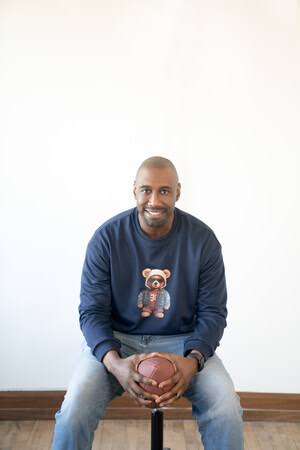
Corey Parchman is a former professional wide receiver, CEO of CorePar Holdings, founder of the Mini Men Pre-K Leadership Academy in Indianapolis, and author of The IVF Playbook for Men. His work spans football, business acquisitions, early childhood education, leadership development, and support for men and couples navigating IVF.
Coaching Leadership: Why Better Basketball Starts With Greater Participation