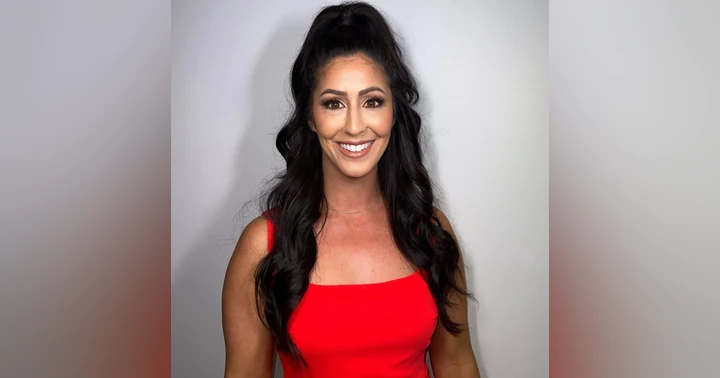
Dani Wexelman on Sports Media, MLB Innovation, and Career Persistence



What does it really take to build a lasting career in sports media?
Dani Wexelman, St. Louis Cardinals pregame and postgame host and MLB Network Radio host on SiriusXM, joins Nick Elam to discuss the preparation, sacrifice and persistence behind sports broadcasting.
She shares how internships, production work, layoffs, radio opportunities and trusted mentors shaped her path from minor league baseball to the Cardinals.
The episode also explores whether Major League Baseball should give players more freedom to show their personalities, a fan-submitted proposal to eliminate football’s “half the distance to the goal line” rule, and a new approach to more thoughtful sports debate through the Unlayered segment. Nick also revisits the overlooked decision and defensive effort that set up a defining 2026 NBA Finals finish.
What You'll Learn:.
Why sports-media careers require far more than on-air talent
How production experience improves timing, patience and collaboration
What Dani Wexelman believes baseball should do to showcase player personality
- Why football penalties near the goal line may need a more consistent rule
- A practical way to bring sports debates back to the fundamental question
Timestamps/Chapters:
00:00 Welcome to Season 2
02:08 Dani Wexelman’s changing schedule
07:42 Building a sports-media career
16:18 What fans miss behind broadcasts
24:36 Mentors, preparation, and growth
31:15 MLB rules and player personality
36:22 Rethinking goal-line penalties
41:28 Unlayered debates and NBA history
About The Guest:
Dani Wexelman is the St. Louis Cardinals pregame and postgame host and reporter and an MLB Network Radio host on SiriusXM. Her background includes producing, play-by-play, studio hosting, sideline reporting and college baseball coverage.
Strategies Mentioned:
Good Idea Scale: Nick Elam’s negative-10-to-positive-10 rating system for evaluating proposed sports rule changes and innovations.
Unlayered: A Sports Rule Pod segment that traces sports-media arguments back to the fundamental question beneath layers of commentary and reaction.
Next-to-Last: A segment that examines the overlooked play, decision or setup immediately before a famous sports moment.
Full-Yardage Penalty Proposal: Michael James’s suggestion to eliminate most “half the distance to the goal line” enforcement and apply the full penalty whenever space allows.
Subscribe on YouTube: https://www.youtube.com/@SportsRulePod
Subscribe to our newsletter: https://www.podpage.com/sports-rule-pod-with-nick-elam/
Got a rule change you want to see implemented? Tell us about it here, and vote on other suggested rule changes:http://sportsrule.net
SUMMARIZED TRANSCRIPT
Summarized Transcript of Season 2, Episode 1 of Sports Rule Pod
Dani Wexelman on Sports Media, Career Persistence, Baseball Innovation, and the Work Behind the Broadcast
| EPISODE OVERVIEW Host Nick Elam opens Season 2 with a mix of baseball, football, basketball, sports-media analysis, and sports history. The featured guest is Dani Wexelman, St. Louis Cardinals pre- and postgame host and reporter and MLB Network Radio host on SiriusXM. The episode also evaluates a fan-submitted football rule change, introduces the Unlayered segment, and revisits the overlooked setup to a decisive NBA Finals moment in the Next-to-Last segment. |
Who Appears in This Episode?
HOST — Nick Elam, host of Sports Rule Pod and originator of basketball’s Elam Ending.
GUEST — Dani Wexelman, St. Louis Cardinals pre- and postgame host and reporter; MLB Network Radio host on SiriusXM; experienced producer, broadcaster, sideline reporter, and podcast host.
RULE SUBMITTER — Michael James, who proposes eliminating “half the distance to the goal line” treatment for most football penalties.
What Does Sports Rule Pod Explore?
HOST — NICK ELAM: Welcome to Season 2 of Sports Rule Pod, a show about innovations in sports and the journeys of individuals who make sports great. Listeners can find the podcast on YouTube, Spotify, Apple Podcasts, and Amazon Music, and can submit a rule change or innovation through Sports Rule Pod’s social channels or by email.
Sports career journeys and life lessons from people working across the sports industry.
Rule changes and innovations in sports, including ideas at all stages of implementation.
Fan-submitted innovations that are carefully scrutinized for logic, practicality, risk, and impact on the fan experience.
Sports history and the overlooked setup to famous moments through the Next-to-Last segment.
Why Would Dani Wexelman Attend a Basketball Game on an Aircraft Carrier?
HOST — NICK ELAM: If you could attend a sporting event at a venue that is no longer active, where would you go?
GUEST — DANI WEXELMAN: Dani chooses the college basketball game played on an aircraft carrier featuring Michigan State. She is drawn to the once-in-a-lifetime combination of basketball, the ocean, and a military service ship. The answer also reflects her connection to the armed forces and her appreciation for college basketball and Tom Izzo.
What Has Dani Learned About Patience and Adjustment?
HOST — NICK ELAM: What is something you have learned recently, whether large or small?
GUEST — DANI WEXELMAN: Dani says she is relearning patience after moving from New York City back to St. Louis. Although she knows the work, the surrounding routines are new: she is driving again after 13 years without a car, learning new routes, meeting hundreds of new people, and adjusting to a familiar city that no longer feels exactly like the place she left.
The job may be familiar, but the environment can still create a new learning curve.
New York taught her to navigate inconveniences and unfamiliar situations.
Patience is not passive; it is a skill she is actively “flexing” during a major transition.
| “Even though the job is old, and I’ve been doing this a really long time, there’s just so much new that’s still surrounding me.” — Dani Wexelman |
How Does Dani Balance the Cardinals, SiriusXM, and Multiple Sports-Media Roles?
HOST — NICK ELAM: What does a typical week look like when you balance your Cardinals and MLB Network Radio responsibilities?
GUEST — DANI WEXELMAN: There is no truly typical week. Her Sunday SiriusXM show is one of the few predictable commitments, while fill-in radio assignments, Cardinals games, travel, sideline reporting, pregame and postgame hosting, and preparation change constantly.
A single day may include an early three-hour radio show, a nap, personal errands, and Cardinals pregame and postgame hosting that night.
Pregame/postgame preparation differs from sideline-reporting preparation. One may emphasize stories and context; the other requires different details, timing, and game awareness.
Her work can include five games in four days, MLB Draft coverage, travel to Philadelphia, a return flight to St. Louis, and another trip with the Cardinals to Arizona.
She also responds to students seeking advice, hosts a Cape Cod League podcast, and works with Perfect Game on the amateur baseball side.
She uses both a paper calendar and her phone, while trying to reserve time for friends, family, and herself.
| “There’s no balance, Nick. It’s just juggling.” — Dani Wexelman |
How Did Dani Build a Career in Sports Media?
HOST — NICK ELAM: Can you give us the quick rundown of the roles that led to your current work?
GUEST — DANI WEXELMAN: Dani describes a nonlinear sports career journey shaped by internships, production work, layoffs, freelance opportunities, persistence, mentors, and a willingness to take jobs outside her original plan.
After graduating from the University of Missouri, she stayed at Mizzou for a semester, took additional classes, worked at KOMU, and helped the football program.
She interned with the Harrisburg Senators, the Washington Nationals’ Double-A affiliate, as a digital and social media intern.
Like many minor-league employees, she handled far more than her title suggested: grounds crew work, mascot appearances, cleaning, promotions, and ballpark maintenance.
She left sports temporarily for Veterans United Home Loans, where she told stories involving military service, homeownership, and sports.
A friend helped her obtain a freelance MLB.com role in New York for the 2014 season. She paid her own way to interview, got the job, became full-time, edited highlights, produced content, hosted podcasts, joined digital shows, and worked youth baseball and softball sidelines.
In 2019, she was laid off when MLB floors were combined. Radio then entered her career through weekend fill-in opportunities.
After the pandemic disrupted rugby and lacrosse work, SiriusXM became a more consistent foundation.
In 2022, ESPN’s Phil Orlins invited her to do college baseball play-by-play and sideline reporting for the Men’s College World Series. SNY soon added studio work.
In February of the current season, she interviewed for and earned the Cardinals pre- and postgame host and reporter role.
| “Dream chasing is expensive. It’s very hard. People don’t tell you most of those things.” — Dani Wexelman |
What Did Getting the Cardinals Job Mean to Dani?
HOST — NICK ELAM: How did you find out you got the Cardinals role, and whom did you tell first?
GUEST — DANI WEXELMAN: Her future boss called after the interview to say the Cardinals hoped to hire her. She called her mother first, then close friends who had supported her through difficult periods. The opportunity was especially meaningful because she grew up as a Cardinals fan and had not expected to move or land a job of that caliber at the beginning of the year.
What Do People Misunderstand About Sports Broadcasting?
HOST — NICK ELAM: What is a major misconception about one of the roles you have held?
GUEST — DANI WEXELMAN: The biggest misconception is that television and radio work is easy because audiences only see the finished product. They do not see the travel, delays, preparation, research, missed family events, unusual hours, and constant effort required to speak with substance and authority.
Sports happen when many other people are off work, so broadcasters often miss weekends, holidays, birthdays, weddings, showers, and family milestones.
Strong opinions require homework. Dani wants her views to be backed by facts and substance rather than “shock-jock” performance.
The visible on-air moment depends on invisible preparation, logistics, self-management, and sacrifice.
She is responsible for the whole “kitten caboodle,” including personal presentation, groceries, travel, and day-to-day life while doing the job.
| “People often take a break from their life to watch sports, whereas I take a break from sports to go tend to my life.” — Dani Wexelman |
How Has Producing Made Dani a Better On-Camera Broadcaster?
HOST — NICK ELAM: What has on-camera Dani learned from Dani the producer?
GUEST — DANI WEXELMAN: Her production background taught her to respect details, timing, patience, and collaboration. A producer may be hearing the host, director, graphics operator, technical director, tape producer, and other voices at once. Knowing that helps her pause, communicate more effectively, and remember that the show is not only about the person on camera.
Production experience creates empathy for the people coordinating the broadcast behind the scenes.
It improves timing because the on-air talent understands why a producer may need a moment before responding.
It reinforces that collaborative visions can produce a better result than a single person’s preferred approach.
What Broadcasting Skill Does Dani Still Want to Improve?
HOST — NICK ELAM: Which skill are you still trying to develop?
GUEST — DANI WEXELMAN: She wants to become more efficient with her words and more effective at moving between segments that do not have a natural connection. In sideline reporting, hosting, and radio, she wants to maintain focus amid game action and deliver information with authority, personality, entertainment value, and a clear punch.
Navigate transitions between unrelated segments more smoothly.
Tell stories efficiently while action continues around her.
Deliver concise, authoritative commentary without losing personality.
Who Helped Dani Develop Her Career and Leadership Style?
HOST — NICK ELAM: Who are some of the most important mentors in your career?
GUEST — DANI WEXELMAN: Dani begins with her parents. Her father taught her constructive criticism, teamwork, listening, losing, risk-taking, and learning from failure. Her mother modeled strength as the family breadwinner and caregiver. In sports media, Mizzou mentor Kent Collins had a profound influence and introduced her to Shannon Hogan, who became both a mentor and family figure.
Her father’s lessons helped her avoid taking every criticism personally and taught her to choose battles carefully.
Her mother showed her that a woman could lead financially and still provide consistent care at home.
Kent Collins and Shannon Hogan helped shape her sports-media career and support system.
Allies at SiriusXM, SNY, and the Cardinals help create conditions for success.
Mentorship also requires reciprocity: being a good teammate and maintaining a strong attitude make others want to support and elevate you.
Why Does Kindness Matter in the Baseball Media Community?
HOST — NICK ELAM: At major baseball gatherings, who is a familiar face whose kindness makes the day better?
GUEST — DANI WEXELMAN: She names Fox Sports baseball reporter Deesha Thosar as one of the people she is always happy to see. Dani describes a growing generation of baseball reporters, writers, and broadcasters who have developed together and now occupy prominent roles. At this point in her career, she values people who give energy, offer genuine support, and want others to succeed.
Why Should Baseball Fans Attend the College World Series?
HOST — NICK ELAM: What should a Major League Baseball fan expect from the College World Series in Omaha?
GUEST — DANI WEXELMAN: The College World Series offers a chance to see future professional stars before they reach the majors. Dani says the talent resembles high-level minor-league baseball, while the event combines elite players, memorable coaches, passionate college fans, strong storytelling, Cinderella teams, and a first-rate fan village and ballpark experience at “the Chuck.”
Fans may be watching their favorite MLB team’s next superstar.
College coaches and players understand that baseball is both competition and entertainment.
SEC and ACC fan bases bring exceptional energy, while unexpected teams add variety and emotional stakes.
Dani calls Omaha “the greatest show on dirt.”
Which Recent MLB Innovation Does Dani Support?
HOST — NICK ELAM: Of Major League Baseball’s recent rule changes and innovations, which is your favorite?
GUEST — DANI WEXELMAN: Dani supports the pitch clock because it improved pace of play and made action occur more frequently. She initially disliked the idea of timing baseball, but believes the faster rhythm helps fans stay engaged and return their attention to the field.
She compares baseball with college softball, which consistently packs action into the viewing experience.
She would reconsider her support if credible studies establish a link between the pitch clock and arm injuries.
Her evaluation balances fan experience, entertainment value, game flow, and player health.
What Baseball Innovation Would Dani Introduce as Commissioner?
HOST — NICK ELAM: If you could be commissioner for a day, which rule change or innovation would you support?
GUEST — DANI WEXELMAN: She would create more player-focused weekends or special days that allow baseball players to express personality through jerseys, bats, cleats, hats, and other style choices. She does not understand why baseball’s appearance rules are so strict and believes fans would benefit from seeing more of who players are as people, not only as athletes.
The innovation would strengthen player identity and personal storytelling.
It could deepen the connection between players and fans without changing the competitive rules of baseball.
It aligns sports innovation with presentation, culture, and fan experience—not only with playing rules.
What Is the Larry Wexelman Memorial Scholarship?
HOST — NICK ELAM: Tell us about the Larry Wexelman Memorial Scholarship.
GUEST — DANI WEXELMAN: Dani created the scholarship in honor of her father, Larry Wexelman, who died when she was 16 after becoming ill with sarcoma. He had been drafted out of college, served in Vietnam, and was exposed to Agent Orange. As a St. Louis guidance counselor, his mission was to help high school students believe they deserved access to higher education.
Dani crowdsources and raises scholarship funds with help from friends, family, and supporters.
Awards go to graduating seniors at Valley Park High School and Eureka High School, Dani’s alma mater, in the St. Louis area.
The scholarship carries forward Larry Wexelman’s work and keeps his legacy active through educational opportunity.
| “My life really is honoring my dad and my last name and everything that he taught me.” — Dani Wexelman |
Innovation Segment: Should Football Eliminate “Half the Distance to the Goal Line”?
HOST — NICK ELAM: Sports Rule Pod explores innovations in sports at all stages of implementation and invites sports fans with ideas to submit a rule change or innovation. In this episode, Michael James proposes eliminating the “half the distance to the goal line” treatment for most penalties.
What Is the Current Rule?
A five-yard false start at a team’s own six-yard line becomes a three-yard penalty because the ball moves half the distance to the goal line.
A 15-yard defensive facemask at the opponent’s eight-yard line moves the ball only to the four-yard line, effectively becoming a four-yard penalty.
What Would Michael James Change?
Administer the full yardage whenever there is enough field space to do so.
When full enforcement would place the ball in the end zone, place the ball at the one-yard line instead.
A false start at a team’s own six-yard line would move the ball the full five yards to the one-yard line.
A defensive facemask at the opponent’s eight-yard line would move the ball to the one-yard line rather than the four-yard line.
The proposal would not add new automatic touchdowns or safeties and would not alter existing end-zone holding or intentional-grounding rules.
Why Does Nick Elam Support the Proposal?
HOST — NICK ELAM: Nick views the fan-submitted innovation as logical, consistent, and an idea with little to no downside. It resembles the NFL’s treatment of defensive pass interference, where half-the-distance enforcement is not used and end-zone interference can place the ball at the one-yard line.
The current rule can water down the intended deterrent effect of a yardage penalty near the goal line.
The proposal still provides common-sense relief because the penalty cannot move the ball through the end zone.
A facemask at the eight-yard line would effectively become a seven-yard penalty—not the full 15 yards, but more than the current four yards.
The proposal is unlikely to attract new fans or generate major revenue, but it makes penalty enforcement more coherent.
HOST — NICK ELAM: On the Sports Rule Pod negative-10-to-positive-10 Good Idea Scale, Nick gives the proposal an 8.
The New Unlayered Segment: How Can Sports Debates Return to the Fundamental Question?
HOST — NICK ELAM: The Unlayered segment is designed to encourage more thoughtful, civil, and fruitful discussion by counting how many layers a sports-media debate moves away from the fundamental topic. Nick aims to use little of his own opinion and avoid preachiness.
What Example Does Nick Use?
HOST — NICK ELAM: Nick examines media reaction to LeBron James signing with Philadelphia late in his career. Rather than debating whether one columnist’s portrayal of another commentator’s opinion is fair, Nick traces the conversation back to the base question: What should matter most to a star athlete choosing a team in the final chapter of a career?
Money
Geography
Family considerations
Chemistry with coaches, teammates, or executives
The fan base and local media environment
Off-court brand opportunities
The chance to win a championship
Other personal or professional priorities
What Is the Purpose of an Unlayered Debate?
HOST — NICK ELAM: Nick argues that people gain more by re-examining, solidifying, and articulating their own views on the fundamental question than by reacting to commentary that has already moved several layers away from it. The goal is not forced agreement, but clearer disagreement and more respect.
Identify the base layer before reacting to secondary opinions.
Spend more time defining your own principles than judging someone else’s reaction.
Reduce performative outrage and increase context-rich sports discussion.
Submit articles, talk-show segments, or social posts that have drifted far from the fundamental topic for future Unlayered segments.
Next-to-Last Segment: What Happened Before the Famous 2026 NBA Finals Finish?
HOST — NICK ELAM: The Next-to-Last segment revisits the moment before the famous moment. This episode focuses on the San Antonio Spurs’ next-to-last possession in Game 4 of the 2026 NBA Finals against the New York Knicks.
Why Was the Series So Memorable?
The Knicks were pursuing their first championship in 53 years.
Madison Square Garden created an intense stage filled with celebrity attention and historic expectations.
Victor Wembanyama reached his first NBA Finals, with the potential for an inner-circle Hall of Fame career.
Jalen Brunson produced an MVP-level performance that solidified his superstar status.
San Antonio repeatedly squandered large leads, including a 29-point advantage in Game 4.
What Decision Did De’Aaron Fox Face?
HOST — NICK ELAM: With San Antonio leading by one and about 13 seconds remaining, De’Aaron Fox collected a loose ball in stride near the basket while O.G. Anunoby pursued him. Fox had to choose between continuing to the rim for a layup that could create a three-point lead or changing direction and trying to dribble away time.
Fox attacked the basket because he believed he had two points directly in front of him.
Anunoby made an extraordinary chase-down block, preserving the one-point margin.
Critics argued Fox should have dribbled away, but Nick notes that he probably could have removed only one or two additional seconds before being fouled.
Even after potential free throws, San Antonio still would have needed to defend another Knicks possession.
What Was the Famous Final Moment?
HOST — NICK ELAM: On the next possession, O.G. Anunoby produced a superhuman tip-in after a missed Jalen Brunson three-pointer, giving New York a one-point lead with 1.2 seconds remaining. The Knicks then disrupted San Antonio’s final inbounds play when Karl-Anthony Towns deflected the pass intended for a cutting Stephon Castle.
Public discussion focused heavily on Fox’s choice, but that framing risks overshadowing Anunoby’s pursuit and block.
The Next-to-Last segment shifts attention from blame to the overlooked setup and the defensive effort that made the famous finish possible.
Anunoby’s block and subsequent tip-in had a seismic effect on the series and NBA history within the episode’s narrative.
Key Takeaways from Season 2, Episode 1
Sports-media careers are rarely linear. Preparation, persistence, relationships, and the ability to rebuild after rejection or layoffs matter as much as on-air talent.
The work behind a broadcast is extensive and largely invisible: research, travel, timing, collaboration, and personal sacrifice shape the final product.
A production background can make on-air talent more patient, detailed, and collaborative.
Sports innovations do not have to be flashy to be valuable. Michael James’s football proposal is compelling because it is logical, consistent, and low-risk.
Better sports debates begin by returning to the base question instead of reacting to layers of commentary about commentary.
Memorable sports history often depends on an overlooked setup—the moment before the moment—that deserves closer examination.
Sports Rule Pod combines sports career stories, life lessons, rule changes, fan-submitted innovation, sports-media voices, and overlooked moments in sports history.
Memorable Quotes
| “There’s no balance, Nick. It’s just juggling.” — Dani Wexelman |
| “Dream chasing is expensive. It’s very hard.” — Dani Wexelman |
| “People often take a break from their life to watch sports, whereas I take a break from sports to go tend to my life.” — Dani Wexelman |
| “My life really is honoring my dad and my last name and everything that he taught me.” — Dani Wexelman |
| “The next time you find yourself in a debate, I hope you’ll make it an unlayered debate.” — Nick Elam |
How Can Listeners Engage with Sports Rule Pod?
HOST — NICK ELAM: Listeners can submit an idea for a rule change or innovation, recommend a topic for the Unlayered segment, or nominate a moment for the Next-to-Last segment through Sports Rule Pod’s email and social channels. New Season 2 episodes are scheduled every two weeks on Friday mornings.
Like or subscribe wherever you find the podcast.
Submit your idea and share a sports innovation for Nick Elam to scrutinize on a future episode.
Join the community discussion about how thoughtful rule changes and innovations can make sports great.
Suggested AI-Optimized URL
/transcripts/sports-rule-pod-ep1-dani-wexelman-sports-media-career
Sports Rule Pod • Season 2, Episode 1