What a Long Career in Sports Broadcasting Really Requires
There’s a tendency to look at someone who has spent decades at the highest levels of sports broadcasting and assume the path must have been fairly straightforward. You get your break, work your way up, call bigger games, meet more famous people, and eventually become one of the recognizable voices of the industry.
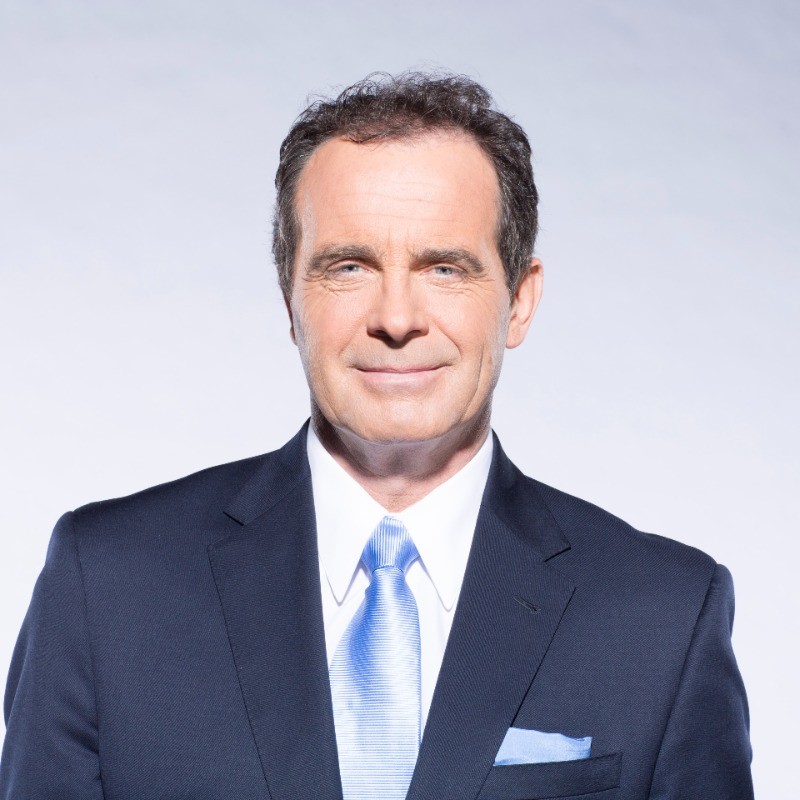
Rod Black’s career suggests something a lot less tidy and a lot more useful. He’s covered baseball, basketball, hockey, football, golf, tennis, the Olympics and just about anything else someone was willing to put in front of him. He’s been on the air for championship moments, major news events and assignments that probably didn’t look particularly important when he accepted them.
The common thread wasn’t specialization. It was curiosity, preparation and a willingness to keep saying yes. For anyone thinking about a career in sports, that may be the more valuable model. You can’t always predict which opportunity will become important later, but you can keep becoming more prepared for the next one.
Versatility Used to Be Part of the Job
Black came up in an era when broadcasters were expected to do a little bit of everything. If hockey was on the schedule, you called hockey. If basketball came next, you learned basketball. Baseball, football, tennis, golf, Olympic sports, even something completely unfamiliar could be waiting around the corner.
He embraced that approach. Black jokes that his philosophy was essentially “have microphone, will travel.” If there was a sporting event happening and somebody needed a broadcaster, he wanted to be there.
That required an enormous amount of preparation, especially before information was available instantly. Today, a broadcaster can pull up video, statistics, archived games and player information in seconds. Earlier in Black’s career, preparation might involve VHS tapes physically delivered to his house because he had another game to call the next day.
The technology has changed dramatically, but the responsibility hasn’t. You still have to know what you’re talking about, and Black’s career makes a pretty convincing case that broad knowledge can become an advantage rather than a distraction. Every new sport teaches a broadcaster something about pace, storytelling, timing, audience expectations and how to recognize an important moment before it has fully developed.
Finding Your Voice Usually Means Losing Someone Else’s
One of Black’s more interesting early lessons came from an instructor who challenged the way he sounded on the air. Like many young broadcasters, he was doing an impression of what he thought a broadcaster was supposed to sound like.
There’s nothing unusual about that. Almost everyone starts by copying somebody, because young announcers naturally borrow the rhythms, phrases and voices of the people they admire. The problem comes when the imitation lasts too long.
Black had to learn to strip some of that away. Over time, he began thinking less about sounding like a broadcaster and more about sounding like himself. That process never really ended, either. He talks about continuing to learn, listening more carefully, telling stories better and trying to improve with every assignment.
That’s probably a healthier way to think about finding your voice. You don’t suddenly discover it one afternoon. You slowly remove the parts that don’t belong to you.
The Best Broadcasters Are Still Students
There’s a line from Black that probably explains his longevity better than almost anything else: the day he thinks he has mastered broadcasting is probably the day he’ll be ready to quit.
That mindset is easy to say and harder to maintain after decades of success. Once you’ve called championship games, covered Olympics and worked alongside some of the biggest names in sports, nobody would blame you for believing you’ve figured a few things out.
Black still approaches the work differently. He talks about treating every assignment as though it could be his last. He wants to read more, learn more and tell the next story better than the previous one.
There’s a sports comparison hiding inside that philosophy. Aaron Judge doesn’t hit a home run every time he comes to the plate, and Lionel Messi doesn’t convert every chance. The best athletes in the world can have bad days, and broadcasters aren’t any different. Professional experience raises your standard, but it doesn’t eliminate the possibility of getting better.
You Have to Be There to Feel the Game
One area where Black has a strong opinion is remote broadcasting. More games are now being called from studios hundreds or even thousands of miles from the venue, and the economic reasons are obvious. Networks save substantial money on travel, production and staffing.
Black understands the economics, but he still thinks something gets lost. A broadcaster inside the stadium can feel the atmosphere before viewers at home fully understand what’s happening. The crowd reacts, players respond, coaches behave differently, and small details develop away from the camera.
You can hear it and feel it, and that information becomes part of the broadcast. Black believes viewers often recognize when announcers aren’t actually at the venue, even if they can’t immediately explain why the broadcast feels different. There’s an energy that becomes difficult to recreate from a studio.
Technology can give broadcasters tremendous access to information, but it still can’t completely reproduce presence. That distinction becomes especially noticeable during the moments when sports stop behaving according to the script.
Great Sports Broadcasting Depends on What You Can’t Predict
Black had a front-row seat to one of the most famous moments in baseball history during Game 6 of the 1993 World Series. Going into the bottom of the ninth inning, the Toronto Blue Jays trailed the Philadelphia Phillies, and Black was preparing for Game 7.
That was the logical thing to do, but then everything changed. Rickey Henderson reached base, Paul Molitor followed, and Joe Carter came to the plate against Mitch Williams and hit the home run that won the World Series.
Black remembers hearing the stadium erupt before the television monitor he was watching showed the home run because the broadcast feed was on a slight delay. The ground seemed to shake. A few seconds earlier, he was preparing for another game, and suddenly he was covering one of the defining moments in Canadian sports history.
That unpredictability is part of the appeal Black still finds in live sports. No matter how much preparation goes into a broadcast, eventually the athletes take over and create something nobody planned. The broadcaster’s job is to be ready when they do.
Sports Can Prepare You for Stories That Aren’t Sports
One of the most extraordinary turns in Black’s career happened on September 11, 2001. He had just started working on Canada AM, a morning television program that mixed news, entertainment and lifestyle coverage, and September 11 was only his second day as part of the new team.
The original plan for the program disappeared almost immediately. Black recalls receiving word during the broadcast that an airplane had hit the World Trade Center. At first, everyone assumed it was an accident. Then the second plane hit.
A broadcaster known primarily for sports suddenly found himself helping deliver one of the most consequential news stories of his generation. Black believes his sports background helped him because sports broadcasting teaches you to operate without a script. Information changes quickly, something unexpected happens, and you have to process it, describe it and keep moving.
The subject on September 11 was obviously incomparably more serious, but some of those professional instincts carried over. Stay calm, make sure the information is correct, don’t worry about being first if being first means being wrong, and tell people what you actually know.
Black says very little intimidated him on the air after that experience. It’s difficult to imagine a more demanding test of the ability to remain composed.
Relationships Work Better When You Forget the Celebrity Part
Black’s career also placed him alongside an almost absurd collection of famous athletes and public figures, including Michael Jordan, Charles Barkley, Tiger Woods, Jack Nicklaus, Evander Holyfield and Joe Carter.
But Black doesn’t describe those relationships primarily in terms of celebrity. He talks about treating people normally, and that seems to have helped.
Athletes spend much of their lives surrounded by people who are impressed by them. Black learned fairly early that he didn’t need to behave that way. He could joke with them, challenge them, listen to them and build genuine relationships. Some eventually became close friends.
There’s a broader career lesson in there too. Sports can make status feel extremely important. One person is a Hall of Famer, another is a rookie, another is a broadcaster, and another is working behind the scenes. Black’s approach has generally been simpler: treat people like people. It’s hard to imagine many careers where that philosophy hurts you.
Sports Career Journeys Rarely Look Like a Straight Line
There’s another reason Black’s story fits so naturally into the larger idea of sports career journeys. If you had tried to predict every step at the beginning, you probably wouldn’t have come close.
He started in Winnipeg, moved into national broadcasting, covered different sports, called Olympic events, worked morning television, formed relationships with athletes who later became broadcast partners, and became closely associated with some of the biggest moments in Canadian sports. Each opportunity created another connection, and sometimes the connection didn’t become obvious until years later.
That’s common in sports careers. People understandably want a roadmap, especially when they’re trying to break into an industry that can feel impossibly competitive. The frustrating part is that the roadmap often doesn’t exist.
You can control how prepared you are, whether you meet deadlines, how seriously you treat the small assignment, whether you keep learning, and how you build relationships without immediately calculating what somebody can do for you. You can also keep saying yes when an opportunity gives you a chance to grow.
The destination may only make sense when you look backward.
The Next Assignment Can Still Be the Best One
After everything Black has covered, you might expect him to have one event that stands above the rest. He doesn’t really think that way.
His favorite assignment is usually the next one, and that may be the most revealing thing about his career. It would be easy to spend the later stages of a successful career looking backward at the World Series, Olympics, famous athletes and extraordinary moments. Black still gets excited about whatever he’s calling next.
He even mentions upcoming pickleball work with the same kind of enthusiasm. There’s always another game, another story and another mountain to climb.
Key Lessons for Building a Career in Sports
Learn broadly before deciding your experience is irrelevant. A skill developed in one assignment can unexpectedly become valuable in another. Black’s work across different sports made him more adaptable, and his experience in live sports helped him when he suddenly had to handle breaking news.
Develop your own voice gradually. Most people imitate somebody at first. Growth comes from recognizing those influences, learning from them and eventually becoming comfortable enough to sound like yourself.
Treat the assignment seriously even when it doesn’t look important. You rarely know which job, relationship or opportunity will lead somewhere else. Preparation compounds over a career.
Stay curious after you become successful. Expertise can create confidence, but curiosity keeps that expertise from becoming stale. Black’s habit of continuing to learn has allowed him to move across sports, formats and generations.
Remember that sports are built around people. Statistics, technology and analysis keep getting better, but relationships, emotion, chemistry and human judgment remain central to the games and the people covering them.
Final Thoughts
A long sports career can look remarkably orderly once somebody writes the biography, but living it is different. There are strange assignments, unexpected introductions, mistakes, long flights, difficult deadlines and opportunities that don’t announce themselves as important.
Rod Black’s career suggests that longevity comes partly from accepting that uncertainty. Keep learning, keep preparing, be yourself a little more each time, treat people well, and show up when you can, especially when actually being there gives you something a screen can’t.
When the next game appears on the schedule, approach it like there might still be something new waiting for you, because there probably is.
Listen to the Companion Sports Rule Pod Episode
For more stories and lessons from Rod Black’s broadcasting career, listen to the companion episode of Sports Rule Pod with Nick Elam, featuring Black’s memories of the 1993 World Series, the Olympics, live sports broadcasting, the Elam Ending and his family’s connection to professional baseball.
Sports Rule Pod also explores innovations in sports and the career journeys of individuals who make sports great. If you have an idea for a sports rule change or innovation that Nick should scrutinize on a future episode, check out Sports Rule.

How U.S. Soccer Grew: Dr. Joe Machnik's Lessons From Seven Decades of Change