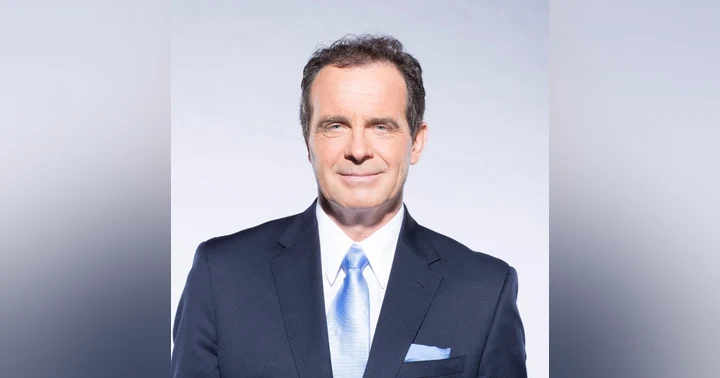
How U.S. Soccer Grew: Dr. Joe Machnik's Lessons From Seven Decades of Change

American soccer didn’t become what it is today because of one great generation of players, one successful World Cup run, or one breakthrough idea.
It grew because people kept building.
They coached. They officiated. They created leagues and camps. They developed players, trained referees, introduced new technology, and kept trying to make the game better in a country where soccer spent decades fighting for attention.
Dr. Joe Machnik’s career runs through just about every part of that story. He’s been a player, college coach, U.S. Men’s National Team assistant coach, referee, officiating administrator, soccer educator, camp founder, and Fox Sports Soccer Rules Analyst. In other words, he hasn’t just watched American soccer grow. He’s had a hand in shaping it.
And when you look at that career as a whole, one lesson becomes pretty clear: sports rarely change because of one dramatic innovation. More often, they change because people keep improving the systems around the game, one step at a time.
American Soccer Once Had to Build Almost Everything From Scratch
It can be difficult to appreciate how different the soccer landscape looked when Machnik was coming up.
Today, young players have access to club programs, specialized coaching, year-round training, position-specific instruction, video analysis, camps, academies, and professional pathways. Back then, much of that either didn’t exist or wasn’t widely available.
Machnik grew up playing in New York City, where immigrant communities and ethnic leagues exposed him to different styles of soccer and different ways of thinking about the game. Later, when he became a coach, those experiences stayed with him.
He listened to players. He paid attention to their backgrounds. He studied how different cultures approached the game. And he developed a coaching style built around passion, observation, and adaptability.
That sounds obvious now, but it wasn’t always the norm.
Sometimes Innovation Starts With a Simple Question
One of the clearest examples comes from Machnik’s work with goalkeepers.
In the 1970s, soccer camps were an important development tool because there simply weren’t as many organized club systems and specialized programs available to young players. But goalkeepers often got the short end of the stick. Many camps didn’t have anyone on staff who had actually played the position or really knew how to teach it.
Machnik saw that gap and created a goalkeeper camp in 1977.
The first year drew 39 goalkeepers from 13 states. By the second year, around 200 goalkeepers from 39 states showed up.
That’s not a bad growth curve.
But what’s more interesting is how the program evolved. Machnik realized that goalkeepers couldn’t develop properly by training only with other goalkeepers. They needed field players so they could learn how to read situations, make decisions, and react to the way the game actually unfolds.
So the camp expanded.
That’s a pretty good model for innovation in sports. You identify a weakness, try something, find out where the new approach is still incomplete, and keep adjusting. The best ideas usually don’t arrive fully formed.
The 1990 World Cup Was a Turning Point for U.S. Soccer
By the late 1980s, Machnik had moved into another chapter of his career, this time as an assistant coach with the U.S. Men’s National Team.
The United States had gone 40 years without qualifying for a World Cup.
Think about that.
For generations of American soccer fans and players, seeing the national team in a World Cup wasn’t a normal expectation. It was something that hadn’t happened since 1950.
Machnik worked primarily with the goalkeepers, including Tony Meola. And while Paul Caligiuri’s famous goal against Trinidad and Tobago in 1989 gets much of the attention, Machnik points to something else when he reflects on that qualification run.
Meola recorded four straight shutouts.
A goal conceded in one of the earlier matches could have made the final qualifying game irrelevant. So while one moment became iconic, there was a whole series of quieter performances that made that moment possible.
That’s often how sports history works. We remember the goal. We remember the final score. We remember the celebration.
But the foundation is usually built long before the moment everybody remembers.
The U.S. Wasn’t Yet Built Like a Soccer Power
When the United States finally reached the 1990 World Cup in Italy, the gap between American soccer and the established soccer nations was obvious.
There was no Major League Soccer yet. The U.S. roster included college players, semi-pro players, and indoor players. The infrastructure supporting the national team was modest compared with what exists now.
Machnik remembers a staff that was essentially head coach Bob Gansler, himself, a trainer, and a doctor. Today, a national team staff can include a long list of assistant coaches, analysts, medical specialists, nutrition staff, psychologists, massage therapists, and other specialists.
That comparison tells you a lot about how far the sport has come.
The 1990 team lost all three matches, but qualifying itself was still a major step forward. It showed that the United States could get back onto the world stage. More importantly, it gave future players, coaches, administrators, and fans something to build on.
Sports Careers Almost Never Make Sense in Real Time
Machnik’s own career is a good reminder of how unpredictable a life in sports can be.
He played goalkeeper. Then he coached. Then he officiated. He worked in indoor soccer. He became involved in coaching education. He worked with national teams. He moved into referee administration. Later, he became a television rules analyst.
If you tried to map that career out at the beginning, it would look ridiculous.
But each experience created something useful for the next one.
His playing background helped him understand players. His coaching background helped him understand coaches. His officiating experience helped him manage referees. His administrative experience helped him understand leagues. And eventually, all of it made him better at explaining difficult rulings on television.
That’s probably one of the more useful lessons for anyone trying to build a career in sports: you don’t always know which experience is going to become important later.
Machnik talks repeatedly about being in the right place at the right time, but there’s another side to that. You still have to be prepared when the opportunity appears.
Mentors Can Change an Entire Career
Machnik also makes it clear that he didn’t build his career alone.
He points to several people who helped guide him, including Walter Chyzowych, Bob Gansler, Earl Foreman, and his former college coach Gary Rosenthal.
Those relationships opened doors, but they also gave Machnik different kinds of education.
From coaches, he learned the game.
From administrators, he learned how leagues operate.
From mentors inside U.S. Soccer, he gained opportunities to teach and coach at higher levels.
And from Earl Foreman, who had experience in several professional sports organizations, Machnik learned a great deal about league management.
The longer his career went, the more those different experiences started connecting with one another.
That’s another recurring theme in sports careers. You may think you’re taking one job, learning one skill, or meeting one person. Years later, that experience may be the reason someone thinks of you when the next opportunity comes along.
What Makes a Good Referee?
Machnik’s approach to officiating also came from having seen the game from several angles.
He wasn’t the type of referee who believed the job was simply to enforce the rulebook as mechanically as possible.
He wanted the game to work.
That meant understanding flow, recognizing intent, knowing when a foul was truly significant, and creating a safe environment for players. He knew what players expected because he had been one. He knew what coaches wanted because he had been one of those too.
That didn’t mean ignoring the rules. It meant understanding how the rules function inside an actual game.
At the highest levels today, referees are judged on critical match decisions involving red and yellow cards, offside, penalty-area fouls, and goals. Modern technology has helped solve some problems, including goal-line decisions.
But technology has also created new ones.
Has VAR Gone Too Far?
Machnik supports the original idea behind VAR.
If a referee makes a clear and obvious error in a major situation, video can help fix it. That makes sense.
The difficulty comes when the technology starts reaching farther and farther back into a play, or when it detects details so tiny that no human being could reasonably perceive them in real time.
At that point, the question changes.
Instead of asking whether a call is technically correct, you have to ask whether the result still serves the purpose of the rule.
Machnik points to examples where goals have been disallowed because of events several seconds earlier, or because technology detected a touch that was essentially invisible to the naked eye.
That’s where the debate becomes more interesting.
If a player is offside by something as small as a hair, technology may be able to detect it. But was the offside rule created to eliminate goals because of differences that small?
There’s no easy answer.
What it does show is that more precise technology doesn’t automatically create a better sport. Sometimes it simply gives us the ability to measure things we never had to think about before.
Innovation Should Solve More Than It Creates
That principle applies to far more than VAR.
Sports are constantly changing. New rules get proposed. Playoff fields expand. Technology gets introduced. Scheduling formats change. Leagues experiment with different ways to improve fairness, entertainment, safety, or revenue.
Some changes work.
Some solve one problem and create three more.
That’s why sports innovation needs to be judged against the actual game, not just against the idea in isolation.
A useful way to look at any sports rule change or innovation is to ask a few basic questions:
-
What problem are we actually trying to solve?
-
How common is that problem?
-
What new problems could the change create?
-
Does the change preserve the basic character of the sport?
-
Will players, coaches, officials, and fans understand it?
-
Does it improve the game enough to justify the tradeoffs?
Those questions don’t always lead to agreement, and that’s fine. Part of the fun of sports is arguing about what should change and what should stay exactly the way it is.
But the quality of the debate improves when we start with the real problem.
The Builders Usually Don’t Get the Same Attention
Machnik was inducted into the National Soccer Hall of Fame as a builder in 2017.
That title fits.
When people think about the history of a sport, they naturally think first about the players. Then maybe the coaches. Those are the people we see.
But sports also depend on the people who build the systems underneath everything else.
They train officials. They create development programs. They improve coaching standards. They organize leagues. They mentor younger professionals. They experiment with new ideas. They keep institutional knowledge alive while helping the sport evolve.
A lot of that work is invisible in the moment.
Machnik describes several points in his career when he had no idea that a particular relationship or experience would become important years later. Someone noticed him. Someone remembered him. Someone trusted him with the next opportunity.
Eventually, those small moments added up to a career spanning seven decades.
And during those same decades, U.S. soccer changed almost beyond recognition.
What Seven Decades of American Soccer Can Teach Us
There’s a tendency in sports to look for the moment when everything changed.
Maybe it was one goal, one championship, one commissioner, one new league, or one rule.
Usually, the truth is messier than that.
American soccer grew because thousands of people kept making the next improvement. Some of those improvements were obvious. Others were barely noticed at the time. One generation created opportunities for the next.
Machnik’s career is a perfect example.
He helped players develop. He coached teams. He worked with the national program. He refereed games. He trained officials. He helped manage officiating at the professional level. And later, he helped millions of viewers understand the laws of the game on television.
No single chapter defines the whole career.
The value comes from all of them together.
Final Thoughts
U.S. soccer still has plenty of room to grow.
The men’s national team wants to go deeper in World Cups. The professional game continues to evolve. Technology keeps changing the way matches are officiated. Player development keeps becoming more sophisticated.
There will be more rule changes. More innovations. More arguments over whether those ideas actually make the game better.
That’s healthy.
Sports are supposed to evolve.
But Dr. Joe Machnik’s career offers a useful reminder about how that evolution actually happens. The biggest changes often come from people who spend years teaching, building, adjusting, mentoring, and learning.
Sometimes the people who make sports great aren’t the ones creating one unforgettable moment.
They’re the ones who keep helping create whatever comes next.
Listen to the Companion Sports Rule Pod Episode
For more on Dr. Joe Machnik’s career, the growth of U.S. soccer, referee development, VAR, and how the sport has changed across seven decades, listen to the companion episode of Sports Rule Pod with Nick Elam.
And if you have an idea for a sports rule change or innovation, send it to nick.elam@sportsrulepod.com for possible discussion on a future episode, then browse and rate our ongoing list of sports rule innovations.
Why the Best Sports Careers Rarely Follow a Straight Line